
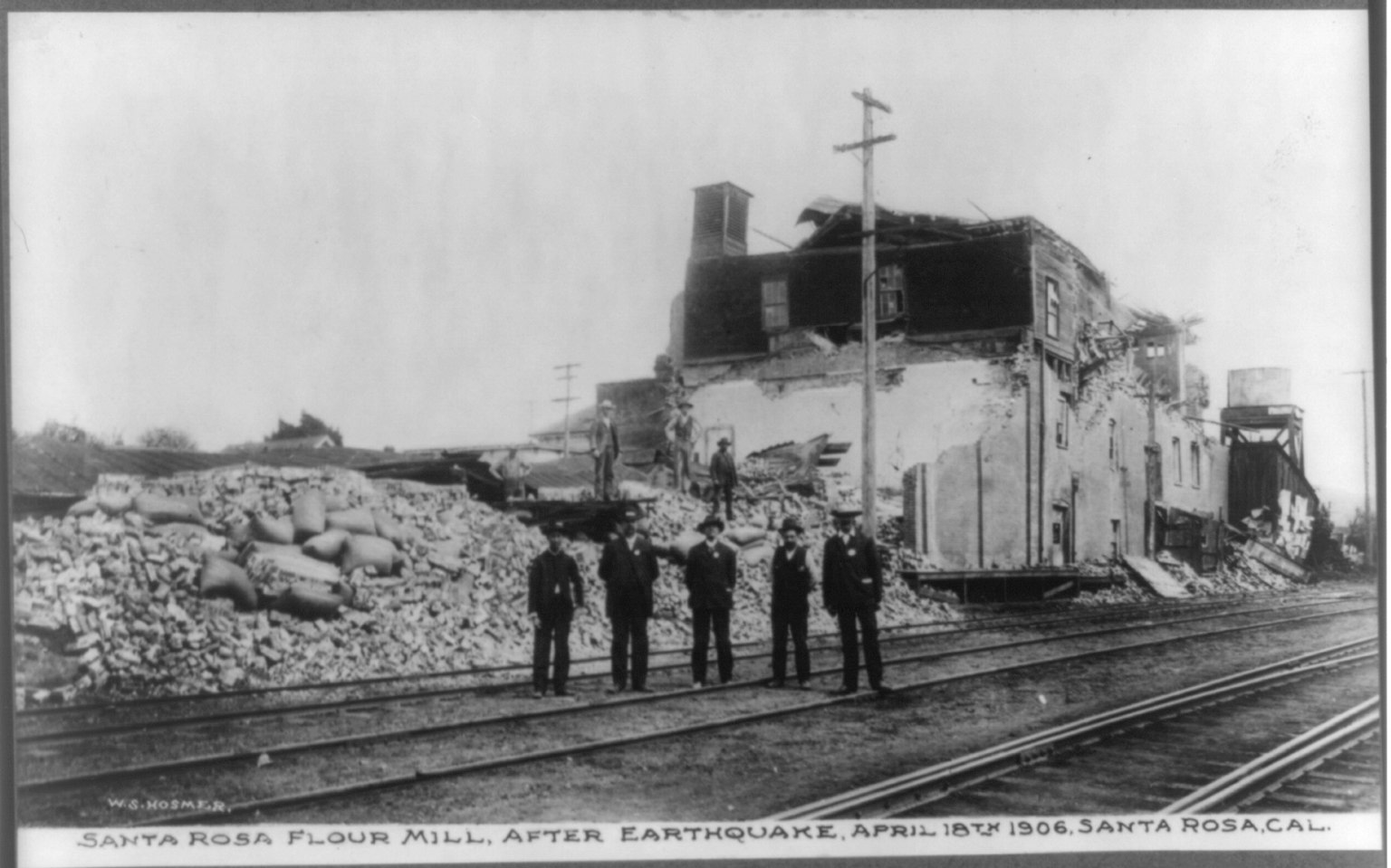
On the 120th anniversary of the earthquake that leveled much of downtown Santa Rosa, new hazard modeling puts hard numbers on what a comparable disaster could mean for Sonoma County today — and the figures are sobering.
Key Takeaways
- A major earthquake on the Rodgers Creek Fault beneath Santa Rosa is projected to kill approximately 275 people and hospitalize nearly 1,100 more.
- More than 10,100 households — with roughly 5,000 needing emergency shelter — could be displaced.
- Total economic losses could exceed $28 billion, with over 4,500 homes and 9,500 commercial buildings destroyed.
- Scientists estimate a 33% chance of a magnitude 6.7 or greater earthquake on the connected Rodgers Creek–Hayward Fault by 2043.
- More than 59% of Sonoma County’s population lives in areas expected to experience intense shaking in such an event.
The Fault Beneath Santa Rosa
The Rodgers Creek Fault runs directly beneath Santa Rosa — part of the same geological system connected to the Hayward Fault, which last ruptured in 1868. According to the Press Democrat, the Rodgers Creek segment last broke in the early-to-mid 1700s, meaning the fault has been accumulating strain for more than three centuries.
Scientists now estimate a 33% chance that the fault produces a magnitude 6.7 or stronger earthquake before 2043. At a midday scenario, hazard models project 275 deaths and nearly 3,400 additional injuries, many of them serious, with nearly 1,100 people requiring hospitalization.
Sonoma County Emergency Services Director Jeff DuVall did not mince words about the threat. “Earthquakes are what keep me awake at night,” he told the Press Democrat.
What a Major Quake Would Destroy
The modeled scenario is catastrophic for the built environment. More than 4,500 residential buildings could be destroyed outright, along with 9,500 commercial structures and roughly 1,700 government, religious, and educational facilities. Schools, hospitals, water mains, bridges, and key stretches of Highway 101 would face heavy damage.
Soft soils along the Russian River and the Santa Rosa Plain are especially vulnerable to liquefaction — a process where saturated ground loses strength and behaves like liquid under sustained shaking. Those soils underlie dense residential neighborhoods and critical infrastructure. The vulnerability of county water systems would compound disaster recovery, echoing concerns already raised about Sonoma County water infrastructure and the recent 5.5-million-gallon Russian River sewage spill.
Who Would Be Hit Hardest
Low-income and elderly residents would bear a disproportionate share of the aftermath, according to the Press Democrat’s report on the modeling. With the county’s housing stock already under pressure — reflected in ongoing fiscal stress hitting Santa Rosa City Schools and other public agencies — absorbing a sudden wave of more than 10,100 displaced households would overwhelm nearly every public system in the region.
Short-term recovery of critical lifelines such as water, power, and roads is projected to take weeks to months. Full housing recovery would take far longer, with the housing shortage disproportionately affecting those least able to absorb the disruption.
Frequently Asked Questions
How likely is a major earthquake near Santa Rosa?
Scientists estimate a 33% chance of a magnitude 6.7 or greater earthquake on the Rodgers Creek–Hayward fault system by 2043, according to the Press Democrat. The Rodgers Creek segment last ruptured in the early-to-mid 1700s, meaning the fault has been building stress for more than 300 years.
What parts of Sonoma County face the most damage?
More than 59% of Sonoma County’s population lives in areas expected to experience intense shaking. Neighborhoods and infrastructure built on the soft soils of the Santa Rosa Plain and Russian River corridor face the highest risk from liquefaction, where saturated ground can essentially turn to liquid under sustained shaking and cause structures to sink or collapse.
What should Sonoma County residents do to prepare?
Emergency officials recommend securing heavy furniture, storing at least 72 hours of food and water, knowing how to shut off gas lines, and reviewing evacuation routes. The modeling findings also underscore the importance of retrofitting older wood-frame and unreinforced masonry buildings, which are disproportionately represented in older Santa Rosa neighborhoods.
Leave a Reply