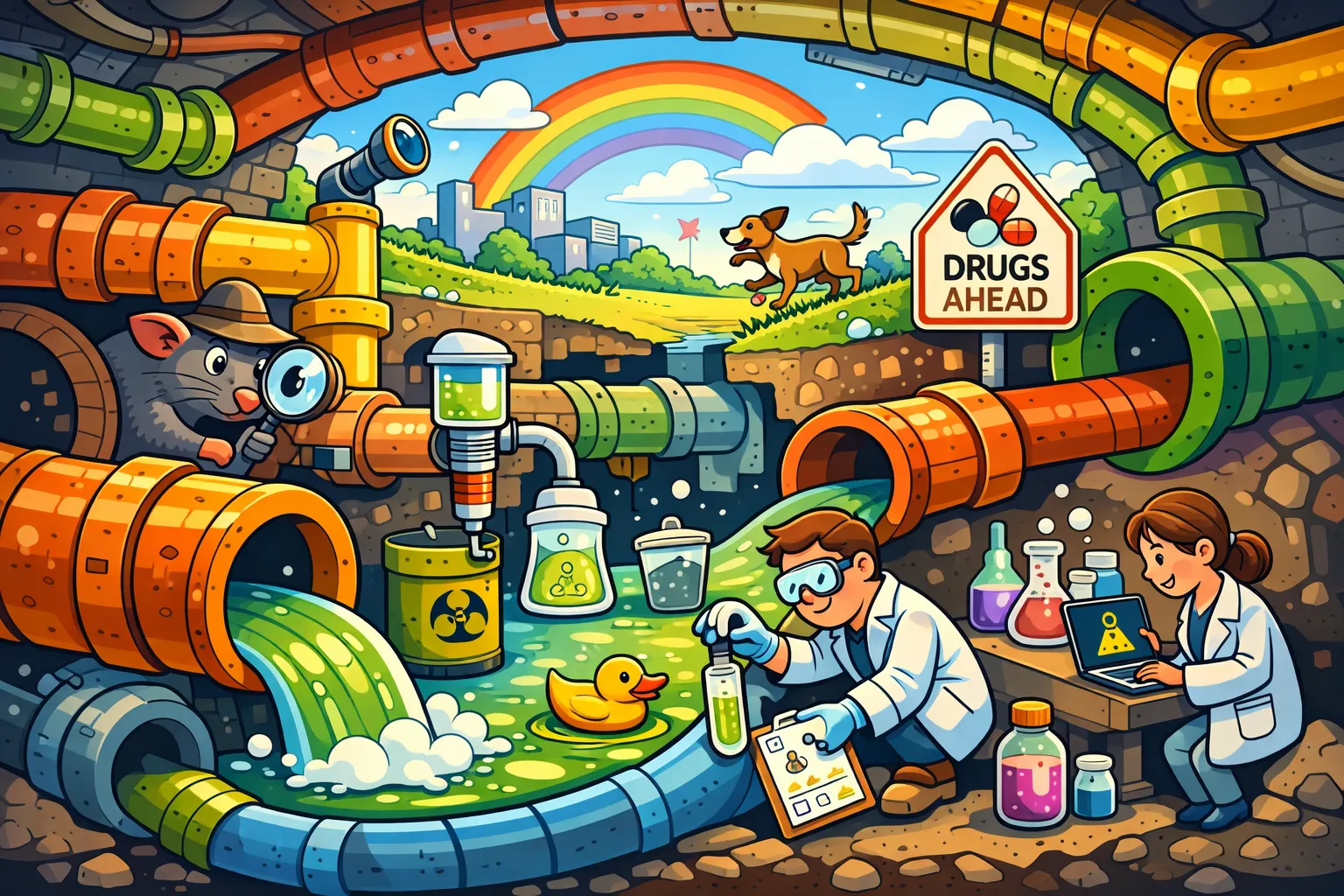
Sonoma County is quietly stepping into a new form of public health surveillance: testing wastewater to estimate community drug use.
The county’s Department of Health Services has begun sampling sewage at major treatment plants and analyzing it for traces of drugs like fentanyl, methamphetamine, cocaine, nicotine and xylazine, sometimes called “tranq.” The idea is simple. What people flush tells a story, and when combined across tens of thousands of residents, that story can reveal drug trends faster than hospital records or overdose reports.
County officials say the program is about prevention, not policing. But the notion of government monitoring sewers raises an obvious question: is this even legal?
Short answer: yes. For now.
Under California and federal law, testing wastewater at a community level is legal and widely used for public health purposes. The state expanded its authority in recent years to allow wastewater monitoring for pathogens and other health indicators, building on systems created during the COVID-19 pandemic. Drug surveillance is now part of that same framework.
Courts have consistently ruled that individuals do not have a reasonable expectation of privacy in wastewater once it enters a public sewer system. In legal terms, it’s closer to trash left at the curb than a medical test. Once waste is mixed together and flowing through public infrastructure, it is no longer considered private.
That legal logic underpins similar programs already operating in Marin County, San Mateo County, parts of Southern California, and dozens of cities nationwide.
What makes wastewater testing attractive to public health agencies is speed and scale. Traditional data, such as emergency room visits or death certificates, often lag weeks or months behind real-world drug use. Wastewater can show spikes in near real time.
If fentanyl levels jump suddenly, officials can respond by distributing naloxone, alerting outreach workers, or warning treatment providers. Supporters say it gives communities a chance to act before overdose deaths rise.
County officials stress that the data is aggregated and anonymized. Samples represent wastewater from large service areas, often covering tens of thousands of people. No attempt is made to identify individual users, households, or buildings.
That distinction matters, legally and ethically.
As long as sampling stays broad, privacy risks are considered low. Problems arise if surveillance becomes more granular. Civil liberties advocates warn that testing smaller catchment areas, such as a single neighborhood or facility, could start to edge toward identifying groups or individuals.
So far, Sonoma County says it has no plans to do that.
The program is being run by public health officials, not law enforcement, and the county says the data will not be used to target arrests or investigations. Similar assurances have been made elsewhere, though critics note that policies can change.
Nationally, wastewater drug monitoring has expanded rapidly. It has been used for years in Europe and Australia and is now common in the United States, often supported by federal health grants. Companies that gained prominence during COVID wastewater testing now offer drug surveillance as well.
Public reaction has been muted. In communities where wastewater testing is already in place, surveys show most residents are neutral or cautiously supportive when the purpose is overdose prevention. Concerns tend to center on mission creep and the fear that data collected for health reasons could later be repurposed.
For now, Sonoma County’s effort sits firmly within the law and within mainstream public health practice. It is legal, anonymous, and designed to track trends, not people.
Whether it stays that way will depend on how the program is expanded, how transparent the county remains, and whether clear lines continue to separate public health from policing.
That debate, like the wastewater itself, is likely to keep flowing.