
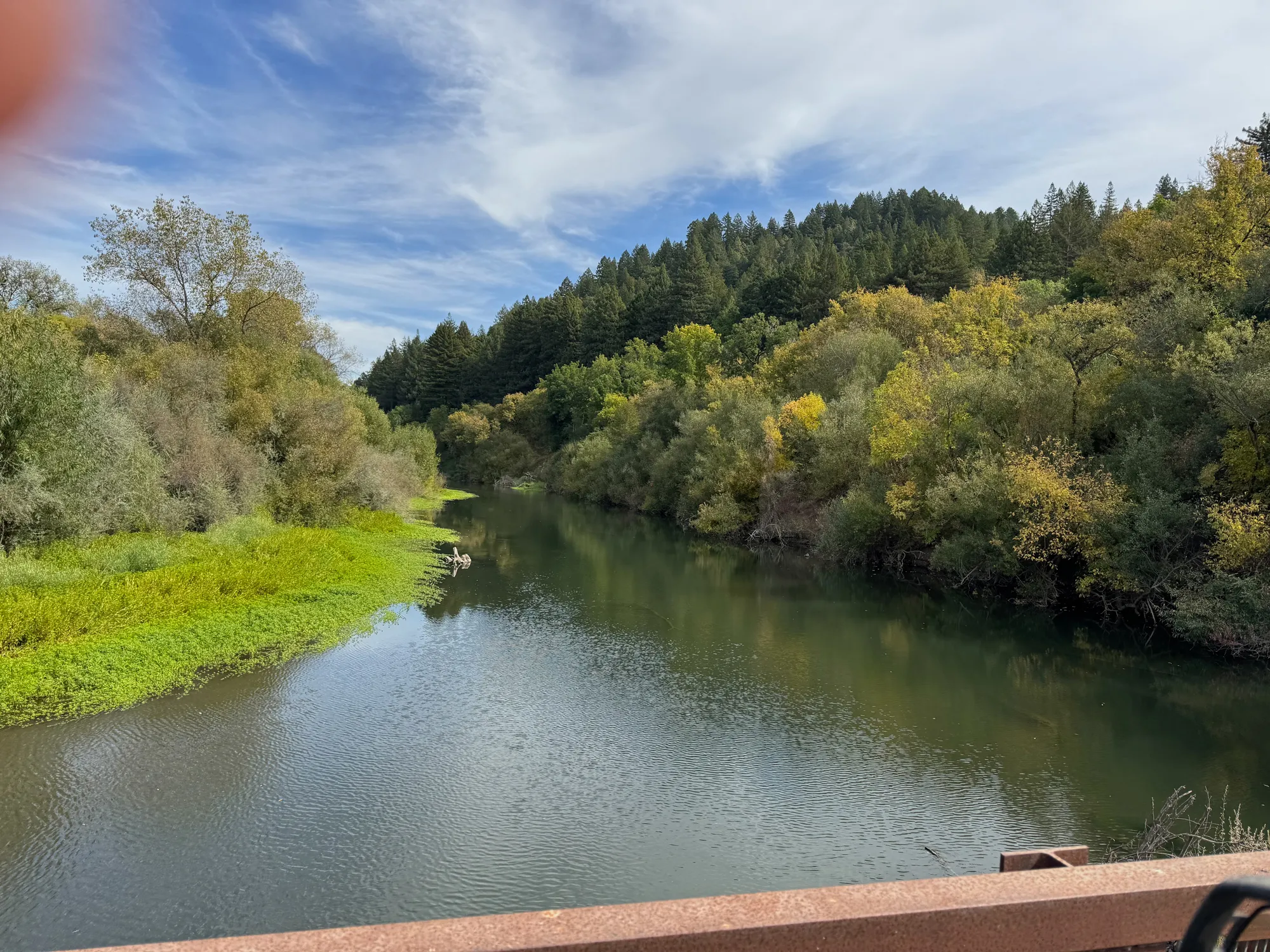
Sonoma Water has declared dry conditions in the upper Russian River watershed — the first such declaration since 2022 — triggering reduced water releases from Coyote Dam and raising early conservation concerns as the region heads into summer.
Key takeaways
- Sonoma Water declared “dry water conditions” in the upper Russian River for the first time since the 2022 drought.
- Minimum flows below Coyote Dam at Lake Mendocino will drop from 185 cubic feet per second to 75 cfs.
- Both Lake Sonoma (98% full) and Lake Mendocino (81% full) remain in good shape — far better than during the 2020–2021 drought.
- A drier-than-normal March and fewer atmospheric river storms this season prompted the early precautionary move.
- About 600,000 North Bay residents from Windsor to northern Marin County depend on these reservoirs.
What the declaration means
Despite reservoirs that remain healthily filled, a hot and dry March — combined with fewer atmospheric river storms than recent years — prompted Sonoma Water to act early. The agency declared dry water conditions in the upper Russian River watershed on April 21, authorizing a significant cut in minimum instream flows below Coyote Dam at Lake Mendocino.
Flows below Coyote Dam will drop from a minimum of 185 cubic feet per second (cfs) to 75 cfs. Below the confluence with Dry Creek, fed by Lake Sonoma, minimum flows will decrease from 125 cfs to 85 cfs. During the 2022 drought, flows fell even lower — to just 35 cfs on the upper river.
Don Seymour, deputy director of engineering with Sonoma Water, told the Press Democrat that flows would still be “adequate for recreating and enjoying the river” this summer. Officials acknowledged, however, that as the dry season deepens through October, conserving water now is critical to ensure adequate carryover into the next water year.
Why this year is different from past droughts
Rainfall totals through mid-April show Ukiah received about 29 inches (86% of normal) while Santa Rosa received about 24 inches (85% of normal) — shortfalls that aren’t dramatic on their own. But this season produced only two or three significant atmospheric river events compared to four or five in each of the previous three years.
Record-breaking heat across California in late winter accelerated Sierra Nevada snowmelt while leaving local landscapes unusually dry. That combination, rather than any single severe drought event, is what triggered Tuesday’s declaration.
Lake Sonoma currently sits at 98% of seasonal capacity, and Lake Mendocino stands at 81% — a stark contrast to 2020–2021, when Santa Rosa recorded just 13.6 inches of rain in a full year. The Army Corps of Engineers made flood-control releases just three times since October, compared to five times the prior year.
Fire risk and a drier landscape
Reduced river flows arrive alongside broader dry-conditions concerns. Sonoma County officials recently announced that a new wildfire risk zone map will add 3,082 parcels to higher-hazard designations. The dry landscape has already prompted fire managers into action: a prescribed burn at Porterfield Creek near Cloverdale this week is one sign that the season is being treated as primed for ignition.
State water authorities would determine any curtailments affecting water rights holders — an outcome officials say remains unlikely this season. Sonoma Water is encouraging voluntary conservation in the meantime.
Frequently Asked Questions
Will the Russian River be safe for swimming and tubing this summer?
According to Sonoma Water’s Don Seymour, flows will remain “adequate for recreating and enjoying the river” despite the reduced minimum levels. Conditions may become shallower and slower by late summer in dry years, however, so expect a different experience than in wetter seasons.
Should I start conserving water now?
Sonoma Water is encouraging conservation but has not issued mandatory restrictions. The reservoirs remain at healthy levels — Lake Sonoma at 98% and Lake Mendocino at 81% of seasonal capacity — but officials want to preserve carryover into next year’s water supply.
How does this compare to the 2020–2022 drought?
Current conditions are significantly better. During that drought, Santa Rosa recorded just 13.6 inches of rainfall in a single year and river flows eventually dropped to 35 cfs. This declaration is a precautionary step taken while reservoirs are still relatively full, not a crisis response.
Leave a Reply