
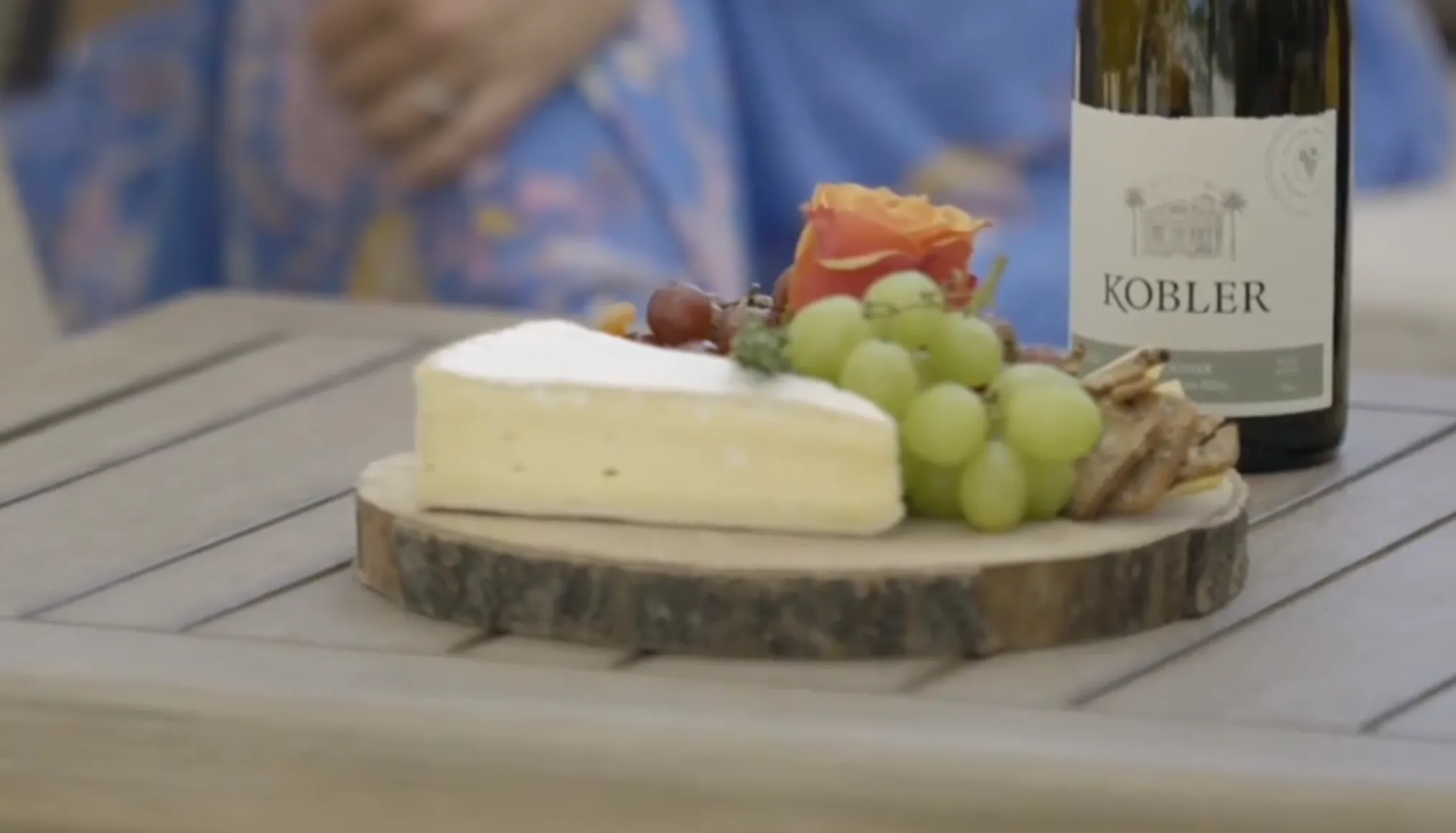
In Sonoma County, change rarely arrives all at once. It tends to move slowly, almost imperceptibly, across vineyard rows that look the same as they did a decade ago. At Kobler Estate Winery in Sebastopol, that change is underway, but you have to know where to look. Owner and winemaker Michael Kobler is converting part of his estate vineyard to white Rhône varieties, not by tearing out vines, but by grafting new plant material onto existing root systems. It’s a technical adjustment, the kind most visitors would never notice, but it reflects a deeper recalibration happening in Sonoma’s wine industry.
For generations, this part of west Sonoma County has been defined by pinot noir. The Russian River Valley built its identity on it, and growers have spent decades refining how to farm it and how to express it in the glass. That hasn’t changed overnight. But the conditions around it have. Warmer growing seasons, more frequent heat spikes and tighter harvest windows are forcing difficult decisions in the vineyard, especially for a grape as sensitive as pinot noir. At the same time, the market is saturated with it. There is no shortage of well-made Sonoma pinot noir, which makes differentiation harder, particularly for smaller producers.
Grafting offers a way to respond without starting over. Instead of replanting — a costly process that can take years before vines return to full production — growers can change varietals relatively quickly while preserving the established root system. In practical terms, it’s one of the few tools that allows a vineyard to pivot on a shorter timeline and with less financial risk. “You can make a change and still have fruit in a year or two,” said a vineyard manager in west county who has worked on similar projects. “That’s huge if you’re trying to adapt.”
The choice of Rhône varieties is not random. Grapes like Viognier, Roussanne and Marsanne are better suited to warmer, more variable conditions. They tend to hold their acidity, even in heat, and they are less prone to the kind of rapid overripening that can derail a harvest. In recent vintages, when heat events have compressed picking decisions into narrow windows, that resilience has become more valuable. For growers looking ahead, these varieties offer a degree of insurance without requiring a complete reinvention of the vineyard.
There is also a stylistic opportunity. In Sonoma’s coastal climate, Rhône whites can take on a different character than they do in traditionally warmer regions. They show more restraint, more acidity, less of the heavy, opulent profile that can define them elsewhere. That aligns with a shift in consumer preferences, particularly among younger drinkers and in restaurant settings, where freshness and balance often carry more appeal than sheer ripeness. Sommeliers have been early adopters, but the broader market has been slower to catch up.
That lag is part of the calculation. Expanding into Rhône varieties means betting, at least in part, on where the market is going, not just where it is. “There’s always a question of timing,” said a Sonoma-based wine buyer. “But these wines overdeliver at the table, and once people try them, they tend to come back.” For producers like Kobler, the move is less about abandoning pinot noir than about building a more flexible portfolio — one that can respond to both environmental and economic realities.
What makes the shift notable is how incremental it is. There’s no sweeping replanting, no dramatic rebranding. Just a series of small, deliberate decisions: a block grafted here, another there, a new bottling added to the lineup. It’s a pattern that repeats across Sonoma County, where change tends to be evolutionary rather than abrupt. Over time, those decisions accumulate, subtly expanding what the region grows and how it defines itself.
Seen in that context, Kobler’s vineyard is less an outlier than an early signal. Rhône whites are still a small part of Sonoma’s overall plantings, but they are gaining ground in pockets, often driven by growers willing to experiment within the margins. If they continue to prove both climate-resilient and commercially viable, they could become a more visible part of the region’s identity.
For now, the shift remains easy to miss. The rows still line up the same way. The vineyard still looks like Sonoma. But beneath that familiarity, the mix of what’s growing is starting to change, one graft at a time.
Leave a Reply